

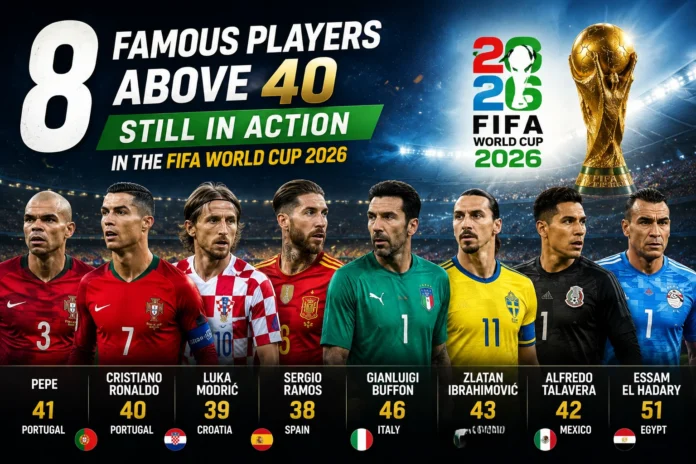
FIFA World Cup 2026 is already drawing attention, and not just because of the hosts. Canada, the United States, and Mexico will share the tournament, and that alone gives this edition a huge stage. The event also brings a familiar question back into focus, which players could still be there at an age when most footballers have already stepped away?
World Cup history has always had room for older names who refuse to fade out. Some players arrive as teenagers, while others show up with years of experience behind them. That mix is part of what makes the tournament so special. A young squad can surprise everyone, but a veteran can still change a match with one moment of calm, one save, one touch, or one goal.
Craig Gordon is one of the names people often bring up in this conversation. At 43, he remains part of the discussion around veteran players and long careers at the top level. Goalkeepers, more than any other position, often stretch their careers longer than outfield players, and World Cup history has shown that age does not always close the door.
Lionel Messi is another name that always comes up when people talk about age and the World Cup. Even at 38, he stays in the center of football talk. He has already built a place in World Cup history, and his presence at any major tournament still carries weight. For fans, that is part of the appeal, seeing a player with that much history back on the biggest stage.
There is also a long list of famous World Cup veterans who shaped the tournament in their own way. Essam El-Hadary made headlines in 2018 when he became the oldest player to appear in a World Cup match, at 45. Before that, Roger Milla had already written his own famous chapter in 1994, when he played at 42 and reminded everyone that age does not erase class.
Those names matter because FIFA World Cup 2026 is not only about the next wave of stars. It is also about continuity, memory, and the players who have stayed relevant for years. The tournament history is full of moments where experience made the difference. A seasoned defender reading the game early. A goalkeeper who stays composed under pressure. A captain who slows the match down when it starts to spin out.
The 2026 edition also has a different kind of scale. With three host countries and a bigger field of teams, the competition will feel larger than ever. More nations means more stories, more players, and more chances for records to fall. That includes age records, goal records, and appearances that people will talk about long after the final whistle.
Mexico, in particular, has deep World Cup memory. It has hosted before, it knows the rhythm of the tournament, and it carries its own football identity into 2026. Canada and the United States bring their own strengths too, and together the three hosts will give the event a wide stage across North America.
When people look back at World Cup history, they often remember the stars who were still there when the rest had gone home. That is why veteran players matter so much. They give the tournament a link between eras. They remind fans that World Cup football is not only about youth, speed, and fresh headlines. It is also about endurance, timing, and staying sharp when the pressure is highest.
FIFA World Cup 2026 will likely bring more of those stories. New names will rise, old names may return, and a few players may add one more chapter to careers that already span decades. That is the part of the tournament fans never stop watching for, the moment when history meets experience on the same pitch.

